Monday, July 13, 2009

Your Body Language, a Billboard of Your Heart

Your body language and what you say or don’t say are sure displays of your heart’s condition—negative or positive. Warning: people know exactly how you feel about them, even when you haven’t said a word. Your body—or your silence—is tattling on your heart. Research in the new field of social neuroscience is providing fresh insight into this process: “Our brains are designed to reflect and catch the state of the person we’re with, which works to our advantage in most situations by helping us understand each other better, says Daniel Goleman, PhD, author of Social Intelligence.”

Smiles and flattery do not cover up unforgiveness marinating in your heart. Even when you choose silence, your heart’s condition is being detected by those you are with. Remember what Paul told the Colossians: “Make allowance for each other’s faults, and forgive anyone who offends you. Remember, the Lord forgave you, so you must forgive others. Above all, clothe yourself with love, which binds us all together in perfect harmony” (Col. 3:13–14 nlt).

Offense is inevitable among humans. Therefore, we should wear the clothing of love so that making allowances will be spontaneous. When it comes to offense, the original incident is the fault of the offender, but my allowing the incident to keep offending me is my choice. I can forgive again and call down a blessing or respond in self-harm and be offended again. “Every time the grievance comes to mind, in fact, the body can re-create the emotional and physical duress that accompanied the original hurt. You become agitated; blood pressure soars; stress hormones are released. Forgiveness, however, can restore peacefulness and balance.”

Hopefully by this point you no longer want to simply forget about an injury—which is not always possible—but rather choose to move on by forgiving and by praying blessings on the offender. If you feel daunted by this challenge, read what Kristin Armstrong wrote:

The very idea of generating feelings of kindness for someone who has broken your heart seems at the very least ridiculous, and at the most . . . impossible. The trick is that it is not all about feelings. [Paul] doesn’t say, “Feel kind and compassionate toward one another.” He said, “Be kind and compassionate to one another.” It’s an order, requiring simple obedience, not emotion. Obedience springs from the love and desire to please God, nothing else.
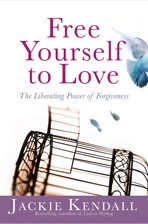
(Excerpt from Free Yourself to Love: The Liberating Power of Forgiveness)

Your book on forgiveness is amazing! I read a lot, especially books about overcoming childhood abuse, but your book is like the "next level". I sat up late the other night reading - and crying - as I identified with each of the counterfeit forms of forgiveness. I think when I am finished reading it; I'm going to have to read it again to make sure it all sinks in!


post signature

Monday, June 29, 2009

Pity for Ernest Hemingway

Ernest Hemingway was one of the most famous American novelist, short-story writer and essayist, whose deceptively simple prose style has influenced a wide range of writers. Hemingway was awarded the 1954 Nobel Prize for Literature.

Why do I have pity for this famous writer? In the last Hope Alert I wrote about a “father’s wound.” This will address a most heinous “mother wound” that happened to Ernest Hemingway.

One of the most tragic revenge scenarios I have ever heard of concerned the author Ernest Hemingway. His mother was so furious that he did not go to college she not only threw him out of the house, but on his twenty-first birthday, she sent him a package. In the package was the gun that his father had used to commit suicide. The mother wrote these words: “I thought you’d want this.”

How could a mother be that hateful to her child? Anger and revenge are so blinding that they can change a person into an emotional monster. Hemingway later committed suicide, as did two of his siblings, Ursula and Leicester.6

You don’t need to hire a professional hit man to hurt another human being for an offense. All humans have creative ways to expedite revenge. If you’re looking to make a person squirm, one of the easiest ways is by not accepting their remorse or apology. I have met hundreds who refuse to accept a person’s apology. These unforgiving people continue to nurse the hurt and grudge, which maintains the emotional gap between offender and offended. I know relatives who have not spoken in years. Such prolonged silence is creative revenge.

In our flesh, we hesitate to lay down our weapon of revenge because of the injustice of it all. The situation seems unjust only because we are not trusting God to enact judgment against the offender. We may think that God is too busy to avenge our offenses or He isn’t moving fast enough for our taste.

I doubt that anyone reading this Hope Alert—would ever do anything as hateful as Ernest Hemingway’s mother did on his 21st birthday. But, when I choose to not forgive a family member or a friend or even an acquaintance…my behavior is as stunning as Mrs. Hemingway. Does that remark seem ludicrous? You and I have been freely forgiven through the precious blood of Jesus and our unforgiving behavior—is an insult to the grace of God in Jesus (Eph. 4:32).

(Excerpt from Free Yourself to Love: The Liberating Power of Forgiveness)


post signature

Monday, June 15, 2009

Hard to Find a Father's Day Card?

Year after year, I see people struggling in front of the card rack, trying to find a Father’s Day card? Why is it so hard? Well, for many people, Hallmark doesn’t produce cards for people who have a father they haven’t forgiven--yet. Oh the difficulty of finding a card, when the father wound in your heart shouts against false sentimentality that is often the theme of Father’s Day cards.

How easy is it for a father to wound his child? My husband, Ken, and I watched the movie Walk the Line, based on the life of Johnny Cash. During the movie there were several painful scenes between Johnny Cash and his father. Johnny’s father was a merciless perfectionist, and his incessant criticism of Johnny helped fuel years of addiction. The shame and anger caused in the heart of a child who has been exasperated by a perfectionistic parent is seen not only in the life of Johnny Cash but in the lives of millions who have heart wounds from such unloving parents.

After the movie Ken said, “I was raised by two perfectionists, and I am a perfectionist, and I am concerned about the impact on our children. When we return home, I want to ask them three questions:


1. What do I do or say that discourages you?
2. Do I do anything or say anything that encourages you?
3. What would you like me to do or say that would encourage you?”

Ken asked both our children, and neither had any major complaints. My heart was touched that Ken was sensitive enough to want to ask such questions. Most parents are often clueless concerning the exasperation and hurt that they have caused their children despite Paul’s admonition: “Fathers, do not exasperate your children; instead, bring them up in the training and instruction of the Lord” (Eph. 6:4).

If you have struggled with shame and anger and you haven’t been able to trace the source, maybe you need to consider the impact of a parent’s words on your heart as a child. A therapist told me, “Jackie, verbal abuse causes heart wounds just like sexual abuse does.” How shocked most critical parents are when they discover the destructive damage done by their criticism and perfectionism. By the same token, silent and neglectful parents can wound as well—another method of aborted love through anger.

Maybe the best gift you can give your father this Father’s Day—is also a gift that you will be giving to your own heart. By faith, choose to forgive your earthly father, as you have been freely forgiven by your Heavenly Father (Matt. 6:9, 12).

(Excerpt from Free Yourself to Love: The Liberating Power of Forgiveness)


post signature

Monday, June 1, 2009

Trash Apologies

A popular counterfeit of forgiveness is overlooking the wrong. This is where you minimize the offense. For example, when you hear a battered woman say, “He really didn’t mean to push me through that door,” or a mother say to her toddler, “Daddy didn’t mean to yell at you,” you are hearing classic minimizing. If he didn’t mean it, then why did he do and say those things? Sometimes we think we’re being forgiving when we look the other way. We think that’s healthy, but it’s not.

True forgiveness is seeing something for what it really is; that’s when you effectively forgive. When someone makes a rude remark and hurts your feelings, don’t just say, “Never mind,” when they ask you what is wrong. We think we’re forgiving if we say, “Oh no, it’s nothing.” That in itself is wrong. Do not minimize the offense by overlooking it in an effort to appear merciful and patient. In fact, we need to pay greater attention to what motivates us to overlook an offense. Sometimes fear motivates us not to say how we are actually hurt. It is even possible that we want to seem forgiving to another, because, after all, we are Christians, but really that is our pride at work.

Minimization also allows for what Dr. Aaron Lazare has titled trash apologies. Trash apologies contain phrases like these:

  • Mistakes were made. (Rather than “I made a mistake.”)
  • To the degree you were offended. (Rather than“To the degree I offended you.)
  • If I did anything wrong . . . (“If” as opposed to “I did something wrong.”)
  • You can’t expect me to be perfect.
  • If I’ve hurt anybody, I’m sorry. (Again, “If” as opposed to “I’ve hurt you, and I’m sorry.”)
  • I’m sorry you are mad. (But I am not responsible for your being mad.)

(Excerpt from Free Yourself to Love: The Liberating Power of Forgiveness)

post signature

Monday, May 18, 2009

Summoned to Forgive

I know that I may seem like a broken record with my incessant references to our need to forgive. I just want you to hear my heart concerning the bottomless pit in relation to comprehending the depth of our need to learn to forgive freely. Having written my heart in print expressing what I have learned over two decades about forgiving freely—I read something that Brennan Manning wrote and I thought—“wow, another glimpse of the fathomless call to forgive.” Our heeding this summons on a daily basis is inextricably linked to being identified as an authentic follower of Jesus! Here is what our brother B. Manning wrote:

The summons to live as forgiven and forgiving children is radically
inclusive. It is addressed not only to the wife whose husband forgot their
wedding anniversary but also to parents whose child was slaughtered by a drunken driver, to the victims of slanderous accusations, and to the poor living in filthy boxes who see the rich drive by in Mercedes....

The demands of forgiveness are so daunting that they seem humanly impossible. The exigencies of forgiveness are simply beyond the capacity of un-graced human will. Only reckless confidence in a Source greater than ourselves can empower us to forgive the wounds inflicted by others. In boundary moments such as these there is only one place to go--- Calvary.

Stay there for a long time and watch as Abba's Only-Begotten dies utterly alone in bloody disgrace. Watch as He breathes forgiveness on His torturers at the moment of their greatest cruelty and mercilessness. On that lonely hill outside the city wall of old Jerusalem, you will experience the healing power of the dying Lord.

"For if you forgive men when they sin against you, your heavenly Father will also forgive you." Mt. 6:14


THIS IS THE GOD OF THE GOSPEL OF GRACE. A GOD WHO, OUT OF LOVE FOR US, SENT THE ONLY SON HE EVER HAD WRAPPED IN OUR SKIN. HE LEARNED HOW TO WALK, STUMBLED AND FELL, CRIED FOR HIS MILK, SWEATED BLOOD IN THE NIGHT, WAS LASHED WITH A WHIP AND SHOWERED WITH SPIT, WAS FIXED TO A CROSS, AND DIED WHISPERING FORGIVENESS ON US ALL.

Last week I summoned an audience to consider forgiving there offenders and afterwards a junior high girl named Emily shared with me her choosing to pray a blessing on her offending “BFF.” She shared that when she prayed a blessing on her friend, her heart was filled with such peace. This young teen, heard the summons to forgive and touched my heart so deeply with her obedience. Jesus whispered “Father, forgive them for they know not what they do” so that Emily and I could shout, “I have been freely forgiven, so I can freely forgive you!” May each of us be as bold as Emily, and forgive the boss that offended us this week or the spouse who has been distracted and neglectful or the child that again has made a choice that is hurtful and very disappointing. Why not pause right now and whisper a prayer of forgiveness on your spouse, child or employer? Amen!


post signature

Monday, May 4, 2009

A New Pledge of Allegiance

Prior to speaking at a large mother-daughter conference, I was told several of the young girls who would be attending had been molested by a staff member. The staff member would be going to trial in the next two weeks, so the past wounds were being freshly confronted.

The morning of this event, I came across the story of Jarius’s daughter, whom Jesus called back to life after she died: “Talitha koum!” (Mark 5:41). Immediately the Lord spoke to my heart and said, “Today, Jackie, you are going to call some young girls back from the dead.” At the conference, as each mother brought her daughter up to me, I prayed over each of them that Jesus would heal her heart wound—that He would call each child back from the emotionally deadening experience of abuse. Jarius’s daughter was twelve years old when she was raised from the dead, and most of the little girls I prayed with were seventh graders—twelve and thirteen years old.

In the first Scripture Jesus ever read publicly, He said He came to “heal the brokenhearted” (Luke 4:18 nkjv). Isaiah also referred to Jesus as “familiar with suffering” (Isa. 53:3). Jesus’ familiarity with suffering allows Him to heal the brokenhearted, and my familiarity with suffering allows me to be a wounded healer—and a healed forgiver—in His name.

Then the Lord reminded me of a term that I found while researching the name Yeshua—friend of the brokenhearted (see Ps. 34:18). The term is Kardiognostes, meaning “the heart-knower.”6 The minute I remembered this term, I saw my hand over my heart in a pledge, which would be a daily whispered prayer: “Kardiognostes, heal my heart wounds.” I told each of the girls to place her hand over her heart and continually whisper this prayer to Jesus: “Heal my heart wound, Lord.” The healing of such a wound takes time . . . I know this all too well.

At the end of the conference, as I was sitting alone at the airport, I placed my hand over my heart and pledged a new allegiance to the One who is the ultimate healer of heart wounds. While my hand was over my heart, I thanked God for the abuse that I had lived through as a child, because the suffering I had experienced became the very platform of hope that Jesus can use to call a person back from the dead—“the soul-deadening experience of sexual abuse.” Before you go to sleep tonight, place your hand over your heart and ask Jesus to heal any fresh or old heart wound. “If we are distressed, it is for your comfort and salvation” (2 Cor. 1:6, emphasis added).


Excerpt from FREE YOURSELF TO LOVE


post signature

Monday, April 20, 2009

"Amica-bull Divorce"

How often have you heard the expression, “amicable divorce?” Talk about an oxy-moron. Amicable refers to a friendly choice which lacks any antagonism. I want to scream when I hear such comments. When there are children involved in a divorce, it is never amicable for the child. In fact, I have created a new descriptive for this reality: “amica-bull divorce.”

Too many times to number, I have listened to people minimize the abandonment they suffered through divorce. Divorce is epidemic, and the denial about the heart wound of abandonment is stunning. Whenever I hear a person say that he or she had an “amicable divorce,” I’m shocked; believe me, the children of the divorce never felt it was amicable. We are too casual about the incredible pain that comes when spouses/parents separate. It is a terrible wound to be abandoned by someone who should have protected, led, and loved you. To minimize that wound usually leads to the offended spouse’s or child’s burying the hurt.

If you bury the hurt, you’ll bury the hate, because believe it or not, where hurt comes, inevitably hate and anger come also. Have you ever considered the parallel between so many angry children and their parents “amica-bull divorce”?

In a book review in the Wall Street Journal, (The Marriage-Go-Round by Andrew J. Cherlin) I read this caption, “Amid divorce, remarriage and co-habitation, children do not do well.” I have witnessed the reality of this caption for two decades as I have counseled thousands of teens whose parents have been divorced. Too many times I have been heartbroken that the child’s parent was more committed to his or her own personal happiness than working for the good of the family as a whole. Cherlin points out in his book, “Americans celebrate individualism more than people in other Western societies and so believe that they are entitled to make choices that maximize their personal happiness.” Such entitlement has moved divorce into epidemic proportions in the U.S.

As divorce increases, the victimized children increase which only validates again the accuracy of my newly penned phrase, “amica-bull divorce: a divorce which is friendly for the adults but antagonistic for the soul of the abandoned child. I will remain busy counseling and comforting hundreds of teens who need to forgive their parents for choices that too often are so me-centric that they are totally oblivious to the impact on their children. (Disclaimer: I know that sometimes divorce is a necessity for the protection of the children—that is not the divorce that the “amica-bull divorce” is referring to.)

Part of every divorce settlement should be a copy of Free Yourself to Love, for everyone involved in this painful choice. The process of forgiving is a life long journey and it doesn’t end when the divorce is final—it has just begun.


post signature