skip to main |
skip to sidebar
Returning memories and fresh details of offense can drag you back into the anger that once ruled you. This is all part of the process of forgiving. Forgiveness is both instantaneous and continuous. I forgive my offender instantaneously and then a few weeks or years later, through a vivid memory of the offense, I forgive again—and again (continuously).
A survivor of the Rwandan holocaust expresses this:
My soul was at war with itself. I’d struggled so hard to forgive but now felt duped for having done so. . . . When my neighbors whispered the stories of my family’s sadistic murders in my ear, the feeling of hatred that I thought I’d banished from my soul sprang violently from the depths of my being with renewed vigor. . . . I tossed and turned for hours. . . . I rolled out of bed and got down on my knees. “Forgive my evil thoughts, God.” A sudden rush of air flooded my lungs. I heaved a heavy sigh of relief. The anger that had gripped me like a returning malignancy was gone.4
This woman’s courage to forgive what many would consider an offense too great, with memories far too relentless and vivid, is absolutely stunning.
Instead of resenting memories, one can rejoice that God wants to free us from ruling emotions that are not healthy or beneficial to ourselves or those around us. So often when I teach on forgiveness, people remark to me afterward that they were having flashbacks while I was teaching. I now alert my audiences about the potential for this and tell them not to fear the memories. Rather, they should fear shoving down more pain that will eventually rise up to rule as a despot.
When a memory or flashback intrudes on your day, examine it and consider this: Have I already forgiven this person and released this event? Or have I buried the hurt and anger, and am I still being ruled by what is buried? As David Seamands wrote: “The submerged emotions rise up and express themselves in feelings of deep depression, rage, uncontrollable lust, inferiority, fear, loneliness, and rejection.”3
The next time your brain sends you a memory, flashback, or dream, remember your need for homeostasis and rejoice that you know the 490 Principle (forgive 70 x 7—forgiving again). Practicing this principle is helping you achieve a PhD in Forgiveness—ultimate Christ-likeness. And becoming experts in forgiveness frees us to be experts in loving others. Memories are not the enemy but a vehicle for truth in the innermost part of our souls.
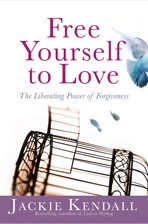
If you are still interested in attending the course on “The Art & Science of Forgiveness,” please come. This class is held on Wednesday’s at Grace Fellowship starting at 7:00 PM and ending at 8:10 PM (so parents can pick up kids when kids’ events end at 8:15 PM). The room is #500 (over the gym). Men and Women are both welcome and childcare is available. The only expense for this class is to get a copy of the book Free Yourself to Love. This book and your Bible will be the class texts.
Tomorrow, September 1, 2009 a new book arrives in stores and on Amazon.com.
The title of the book is: Lady in Waiting for Little Girls: Strengthening the Heart of Your Princess. This book is the offspring of the best-selling book Lady in Waiting. As a single woman, DeDe Kendall was mentored by Jackie Kendall in the principles from Lady in Waiting. During her prolonged singleness (until 40 years old!) DeDe taught these principles to singles, teens and college students. DeDe, a classic “lady in waiting,” finally did marry her prince charming. Having dreamed of being a mother since she was a little girl, DeDe was now anxious to have a baby and was so excited about the prospect of such a blessing. However, during her first year of marriage she was to discover that she was not going to have a baby of her own, but that she was, in fact, infertile.
For many people, living with such a shattered dream amounts to a lifetime of being slashed and bruised by broken shards. But for DeDe, the challenge to live with this shattered dream was not wasted. With God’s help, she would create from those shards a beautiful stained-glass window. DeDe returned to what she knew best: teaching the ten principles of Lady in Waiting. The Lord showed DeDe that although she was physically infertile, spiritually she had thousands of children. She had been mentoring, teaching and inspiring little girls for 36 years, and each of these girls was a precious piece in her mosaic. So it was that DeDe, the vice-principal of a Christian elementary school, began to teach Lady in Waiting to elementary students. This passion was the preparation for a wonderful birth that was to happen.
In DeDe’s 50th year, God showed her that He had something very special for this contented barren woman. Her sister-in-law, Jackie Kendall, was approached about writing a younger girls’ version of her book, Lady in Waiting, and she agreed only because she would have DeDe as a co-author. DeDe knew this opportunity to co-write a book with her mentor, sister-in-law and best friend was a dream come true. Indeed, it was to become more than book project, it was her “baby”— a baby birthed from an infertile woman--Lady in Waiting for Little Girls: Strengthening the Heart of Your Princess.
In Beth Moore’s series on the book of Esther, she teaches the principle of the “reversal of destiny,” where God uses situations, and often difficult ones, as turning points in our lives. DeDe believes that writing this book for moms and their daughters is God’s reversal of destiny in her life. Infertility did not keep DeDe from mothering and loving thousands of children as the beloved “Miss DeDe.” And now Miss DeDe will mentor thousands of moms and daughters through this gift: Lady in Waiting for Little Girls: Strengthening the Heart of Your Princess.
Be the first to order this unique Mother/Daughter book—introducing your daughter(s) for the first time to the timeless principles from the best selling book of Lady in Waiting. Every fairy tale has a moment when the prince finally dances with the leading lady. A little girl’s devotion to God should be similar to that of a princess dancing with her Prince. Lady in Waiting for Little Girls is a mother-daughter mentoring book that is to be enjoyed together (girls ages 5—9). Order today on Amazon.com.
I absolutely squealed out loud when someone told me that three days from today, August 27th is Global Forgiveness Day. All I could think is—I wrote a book that helps a person celebrate GLOBAL FORGIVENESS—EVERY DAY!!! I grasped this vision for this Global Forgiveness Day in the introduction to my book.
I was reading through the workshop notes of a presentation on Forgiveness given on September 7th, 2006, to the United Nations, and began to ponder the privilege of giving such a presentation. Suddenly, I realized that this book is my presentation to an entity even bigger and more influential than the UN: that is, the huge family of God throughout the world. This book is my UN, my Ultimate Necessity presentation, written with the sole agenda of encouraging my brothers and sisters throughout the world to walk in a daily lifestyle of forgiveness. Forgiveness is the call to love, and one can’t love without the developed skill of forgiving freely.
Have you registered for my class this fall: The Art & Science of Forgiveness? I am regularly asked if I am teaching a class locally. For many years, my schedule has not allowed such a privilege. But this fall, my schedule is allowing me to teach a class. Here is a glimpse of the course premise:
We will thoroughly examine forgiveness and its impact on our marriage,
parenting, and friendships. Often the struggles in our day to day relationships can be traced to our inability to forgive freely. Forgiveness
principles and tools that liberate will be examined. Forgiveness is a most
heroic act that rewrites our past and impacts our future.
My home church, Grace Fellowship of West Palm Beach is hosting this class, room #500, Wednesday nights at 7pm this fall.
To register: The online address to register is: www.gfwpb.org, then click on the “Community Interest Groups / Wednesday Electives” banner…that will take you right to the registration page. Class title: The Art & Science of Forgiveness. See you in September!
Recently I was re-reading the acknowledgements I wrote for Free Yourself to Love. When I read what I wrote to my husband and children, I realized that part of the blessing of learning to FORGIVE is to cease making our loved ones carry our pain. Do you need to cease making your loved ones carry your pain—as you live with unforgiveness in your heart? Why not consider joining me this fall for a class I will be teaching titled: The Art & Science of Forgiveness. Here is the course description:
"The heart of emotional health is the ability to forgive. Good relationships (marriages, parent/child, and friendships) are made up of those who have learned how to forgive. This course will examine the "art" of forgiving--forgiving is a specific skill that actually utilizes more creativity than one can imagine. Forgiving freely is a complex science (knowledge) that we will examine and together we will strengthen our 'theology' of forgiving."
The class will begin on Wednesday night, September 2nd, at Grace Fellowship, West Palm Beach. I will be teaching for 11 weeks. If you would like to join me in this class, please go to the online address to register: www.gfwpb.org, then click on the “Community Interest Groups / Wednesday Electives” banner…that will take you to the registration page. Class title: The Art & Science of Forgiveness.
The reason we need you to register—is to have enough chairs set up for those who are coming and workers for childcare. This class will be held on Wednesday’s at Grace Fellowship starting at 7:00 PM and ending at 8:10 PM (so parents can pick up kids when kids’ events end at 8:15 PM). The room is #500 (over the gym). Men and Women are both welcome and childcare is available. The only expense for this class is to get a copy of the book Free Yourself to Love. This book and your Bible will be the class texts.
This class will take you to the next level of understanding the liberating power of forgiveness. Please consider joining the class. I am so excited about teaching this class in my hometown—hope to see you September 2.
Your body language and what you say or don’t say are sure displays of your heart’s condition—negative or positive. Warning: people know exactly how you feel about them, even when you haven’t said a word. Your body—or your silence—is tattling on your heart. Research in the new field of social neuroscience is providing fresh insight into this process: “Our brains are designed to reflect and catch the state of the person we’re with, which works to our advantage in most situations by helping us understand each other better, says Daniel Goleman, PhD, author of Social Intelligence.”
Smiles and flattery do not cover up unforgiveness marinating in your heart. Even when you choose silence, your heart’s condition is being detected by those you are with. Remember what Paul told the Colossians: “Make allowance for each other’s faults, and forgive anyone who offends you. Remember, the Lord forgave you, so you must forgive others. Above all, clothe yourself with love, which binds us all together in perfect harmony” (Col. 3:13–14 nlt).
Offense is inevitable among humans. Therefore, we should wear the clothing of love so that making allowances will be spontaneous. When it comes to offense, the original incident is the fault of the offender, but my allowing the incident to keep offending me is my choice. I can forgive again and call down a blessing or respond in self-harm and be offended again. “Every time the grievance comes to mind, in fact, the body can re-create the emotional and physical duress that accompanied the original hurt. You become agitated; blood pressure soars; stress hormones are released. Forgiveness, however, can restore peacefulness and balance.”
Hopefully by this point you no longer want to simply forget about an injury—which is not always possible—but rather choose to move on by forgiving and by praying blessings on the offender. If you feel daunted by this challenge, read what Kristin Armstrong wrote:
The very idea of generating feelings of kindness for someone who has broken your heart seems at the very least ridiculous, and at the most . . . impossible. The trick is that it is not all about feelings. [Paul] doesn’t say, “Feel kind and compassionate toward one another.” He said, “Be kind and compassionate to one another.” It’s an order, requiring simple obedience, not emotion. Obedience springs from the love and desire to please God, nothing else.
(Excerpt from Free Yourself to Love: The Liberating Power of Forgiveness)
Your book on forgiveness is amazing! I read a lot, especially books about overcoming childhood abuse, but your book is like the "next level". I sat up late the other night reading - and crying - as I identified with each of the counterfeit forms of forgiveness. I think when I am finished reading it; I'm going to have to read it again to make sure it all sinks in!
Ernest Hemingway was one of the most famous American novelist, short-story writer and essayist, whose deceptively simple prose style has influenced a wide range of writers. Hemingway was awarded the 1954 Nobel Prize for Literature.
Why do I have pity for this famous writer? In the last Hope Alert I wrote about a “father’s wound.” This will address a most heinous “mother wound” that happened to Ernest Hemingway.
One of the most tragic revenge scenarios I have ever heard of concerned the author Ernest Hemingway. His mother was so furious that he did not go to college she not only threw him out of the house, but on his twenty-first birthday, she sent him a package. In the package was the gun that his father had used to commit suicide. The mother wrote these words: “I thought you’d want this.”
How could a mother be that hateful to her child? Anger and revenge are so blinding that they can change a person into an emotional monster. Hemingway later committed suicide, as did two of his siblings, Ursula and Leicester.6
You don’t need to hire a professional hit man to hurt another human being for an offense. All humans have creative ways to expedite revenge. If you’re looking to make a person squirm, one of the easiest ways is by not accepting their remorse or apology. I have met hundreds who refuse to accept a person’s apology. These unforgiving people continue to nurse the hurt and grudge, which maintains the emotional gap between offender and offended. I know relatives who have not spoken in years. Such prolonged silence is creative revenge.
In our flesh, we hesitate to lay down our weapon of revenge because of the injustice of it all. The situation seems unjust only because we are not trusting God to enact judgment against the offender. We may think that God is too busy to avenge our offenses or He isn’t moving fast enough for our taste.
I doubt that anyone reading this Hope Alert—would ever do anything as hateful as Ernest Hemingway’s mother did on his 21st birthday. But, when I choose to not forgive a family member or a friend or even an acquaintance…my behavior is as stunning as Mrs. Hemingway. Does that remark seem ludicrous? You and I have been freely forgiven through the precious blood of Jesus and our unforgiving behavior—is an insult to the grace of God in Jesus (Eph. 4:32).
(Excerpt from Free Yourself to Love: The Liberating Power of Forgiveness)
Year after year, I see people struggling in front of the card rack, trying to find a Father’s Day card? Why is it so hard? Well, for many people, Hallmark doesn’t produce cards for people who have a father they haven’t forgiven--yet. Oh the difficulty of finding a card, when the father wound in your heart shouts against false sentimentality that is often the theme of Father’s Day cards.
How easy is it for a father to wound his child? My husband, Ken, and I watched the movie Walk the Line, based on the life of Johnny Cash. During the movie there were several painful scenes between Johnny Cash and his father. Johnny’s father was a merciless perfectionist, and his incessant criticism of Johnny helped fuel years of addiction. The shame and anger caused in the heart of a child who has been exasperated by a perfectionistic parent is seen not only in the life of Johnny Cash but in the lives of millions who have heart wounds from such unloving parents.
After the movie Ken said, “I was raised by two perfectionists, and I am a perfectionist, and I am concerned about the impact on our children. When we return home, I want to ask them three questions:
1. What do I do or say that discourages you?
2. Do I do anything or say anything that encourages you?
3. What would you like me to do or say that would encourage you?”
Ken asked both our children, and neither had any major complaints. My heart was touched that Ken was sensitive enough to want to ask such questions. Most parents are often clueless concerning the exasperation and hurt that they have caused their children despite Paul’s admonition: “Fathers, do not exasperate your children; instead, bring them up in the training and instruction of the Lord” (Eph. 6:4).
If you have struggled with shame and anger and you haven’t been able to trace the source, maybe you need to consider the impact of a parent’s words on your heart as a child. A therapist told me, “Jackie, verbal abuse causes heart wounds just like sexual abuse does.” How shocked most critical parents are when they discover the destructive damage done by their criticism and perfectionism. By the same token, silent and neglectful parents can wound as well—another method of aborted love through anger.
Maybe the best gift you can give your father this Father’s Day—is also a gift that you will be giving to your own heart. By faith, choose to forgive your earthly father, as you have been freely forgiven by your Heavenly Father (Matt. 6:9, 12).
(Excerpt from Free Yourself to Love: The Liberating Power of Forgiveness)




 Posts