Monday, March 30, 2009

How To Forgive the Guy Who is Just Not That Into You

The new comedy He’s Just Not That Into You, reminded me of the painful reality of how many women have been hurt by what I call “bozo” guys. I asked a single gal the other day what she thought of the movie, and she said, “Good but painful.” She went on to say, “It was painful to watch women who just don’t get it.” I have been on the war path for years trying to warn single gals about their pursuit of “bozo” guys. Now I realize that I need to teach singles how to forgive the bozo guy who just broke her heart, to forgive the guy who is “just not that into her”—who used up her attention, time and body and then tossed her like a paper cup. This is my new passion with singles.

How do so many wonderful single gals end up hurt by the guy who is just not that into her? The main reason she gets hurt is she breaks the 11th commandment: “Defraud Not Thyself.” Countless women actually lead themselves on through the fantasy that this guy who just chatted so charmingly with them for an hour may actually be interested in pursuing a relationship with them. Consider how often women are angry about a particular guy leading their girlfriend on in a dating relationship. Girls and women alike are angered when a guy defrauds a girl by leading her on—often the result of a guy’s agenda to merely play at love to get sex.

Yet how often do single woman get angry with their girlfriends who helped feed her own fantasy about “Mr. Right?” Defrauding oneself is such a masochistic crime against a woman’s own heart. To defraud one-self is self harm! When a gal meets a wonderful guy, her immediate response needs to be prayer and not text messaging a friend about the “Mr. Right” she thinks she has just met.

Being offended is inevitable as long as you occupy a place on planet earth—but staying offended is a choice.

After realizing the time and energy you have put into a guy who is “just not that into you,” you are likely going to be very disappointed. Inevitably, disappointment is followed by anger or depression. Because you know it is not healthy to stay angry, you will actually give yourself a “gift” when you consider forgiving this guy. The gift is your freedom.

Why forgive the guy who is just not that into you? When I don’t forgive I become a prisoner to the resentment of being defrauded by him. One needs to forgive this guy for doing what he does best—being human. People assume that “time heals all wounds,” but that is actually not true. Without the freeing choice of forgiving that guy, time simply moves the pain below the surface where it will ferment and poison your heart.

The gift of forgiving allows you to let go of hurt and move on with hope, because when you have hope, you are no one’s prisoner! Don’t be the gal who is held hostage to yesterday as she refuses to let go of unwanted hurt and move on to a new chapter. It’s in that forgiving chapter that you have the prospect of a happy ending—the freedom to hope and love again.


post signature

Monday, March 23, 2009

Time Doesn't Heal All Wounds

People may say that time heals all wounds, but if someone has not done the hard work of forgiveness, time only moves the pain below the surface. So often a person will say, “It hurts too much to feel the pain again.” And my reply is “It hurts more not to feel it.” The insidious crime of rape is not what ultimately kills the soul; it is the shaming silence a woman lives with, often for years, that holds her hostage to the deep offense. Sexual abuse is a soul-deadening crime not only because of the violent, dishonoring physical treatment but also because of the shame that keeps the victim silent.

A dear friend from college sent me some of her counseling notes years ago:

Deal with incest, abuse, etc., in therapy by:
  • Allowing the victims to tell their stories.
  • Allowing the victims to grieve.
  • Helping victims make new decisions—who they are now, etc.
  • Helping them have new experiences.

These notes are so simple and yet so profound. If God’s children would just learn to allow the offended to tell their stories and grieve the offenses—there would be far less spiritual illness in the body of Jesus. When pain is buried, it is buried only for a time. When it comes to the surface of one’s life, and it will come to the surface, it often erupts in destructive behavior that could have been prevented if the person had been able to sufficiently grieve the offense, loss, or devastation.

Shakespeare wisely recommended, “Give sorrow words; the grief that does not speak whispers the o’re-fraught heart and bids it break.”

Time does heal, but time heals only the wounds we allow the light of God to shine on and expose. Time ferments and intensifies wounds that are hidden, but God wants us to come to Him with all this pain. Too often we don’t face our pain because we are too scared. Sometimes we don’t think God will be able to comfort us adequately, but we need to give Him a chance. In truth, He is more than able!

“Blessed be the God and Father of our Lord Jesus Christ, the Father of mercies and God of all comfort, who comforts us in all our affliction, so that we may be able to comfort those who are in any affliction, with the comfort with which we ourselves are comforted by God.”(II Cor. 1:3,4)

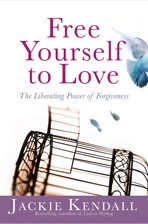
Excerpt from Free Yourself to Love: The Liberating Power of Forgiveness

post signature

Monday, March 16, 2009

Raising Good Forgivers

Are you concerned about your children’s teeth? If you’re like me, you’ve probably been known to harp on your children to brush and floss their teeth. And it’s a good thing to be concerned about! But I am often amazed that parents can be so thorough in teaching their children about dental hygiene yet neglect the ultimate hygiene of the soul. Parents will allow their children to grind their teeth in anger towards a sibling or a teacher or a parent and not get that the soul is actually “cleansed and flossed” when a person learns how to be a good forgiver.

Likewise, we focus on our children doing well in school or in sports to assure them a great future. But here’s a fact: I know hundreds of students who have passed school but have flunked life.

Children who are coached in how to ask forgiveness and how to give forgiveness will be a pleasure to be around their entire lives
Here are a few coaching tips for teaching your child how to be a good forgiver:

  1. Let the child articulate the grievance, offense or hurt (ie., being embarrassed by someone in class)
  2. Ask the child how it made him/her feel. (You are using this situation for healing and instruction in loving freely—which is forgiving freely.)
  3. Ask your child to name a “hero.” Then encourage her or him to do something truly “heroic”—to forgive this person for hurting their feelings.
  4. Encourage your child to pray with you—because to pray for the offending person is to overcome evil with good. Pray that God will bless this person and make him more like Jesus. (Rom. 12:21) (Note: You can’t fail when you pray with your child. In fact, the only failure in prayer is to not pray.)
  5. Remind your child after praying for the offender that this prayer was a most “heroic” act—to pray blessings on those who hurt you is using the “super power” of Jesus’ in you!

One day our daughter came home crying about how mean her teacher had been the whole week. Apparently there had been several incidents where she had actually screamed at some of the students, including our daughter. I let her continue to share details, so that she could express her difficult feelings, and when she was done I said, “We need to pray for your teacher before you go to sleep tonight.” Our daughter said, “We need to pray for her tonight and when we drive into school tomorrow!”

You see, our daughter was used to the “heroic” choice of forgiving others by praying for them and asking God to bless them—even when they were not acting very loving. We continued to pray for this teacher, and after a week, the teacher actually wrote a letter of apology to every student. Her private world was in chaos, and she was unfortunately taking her pain out on the students.

This incident was not isolated. If I asked my kids, “What do we do with mean teachers?” they would reply, “We pray blessings on them!” “What blessing do you think she needs?” I would ask, and immediately our child would say, “She needs to be nicer.” “OK! Well, being nicer would be a blessing to her and everyone around her.” Then we would pray. Almost inevitably, we witnessed improvement in the disposition of a mean teacher and would rejoice for the obvious answer to prayer.

These tips on forgiving also apply to mean teens. Some teenagers are so mean they emotionally “eat your child for breakfast” when arriving at school. Parents can miss this chance to tutor their teens in the skill of forgiveness through praying for these mean teens. Praying for the kids who hurt kids is a noble and heroic mission; and, in fact, those mean kids themselves are a critical mission field in our kids’ lives.

And remember, as parents, we need to practice these things as much as our children. Being offended is inevitable but staying offended is a choice. A healthy family is a place where failure is not fatal, and where forgiveness is given as freely as hugs and kisses.


post signature

Monday, March 9, 2009

Are You Mad at Bernie Madoff?

As I read details of the impact of Bernie Madoff’s investment scam, I can’t help for a moment but be “mad at Madoff.” Reading some of the details of the 13,000 victims of maybe the largest investment scam ever, I find myself imagining a vicious plan of vengeance—and I wasn’t even one of his clients! Madoff’s pride and greed allowed him to cause the hemorrhaging not only of people’s life savings but also their souls.

This heinous Ponzi scam requires more than a mere modicum of justice; but until that happens, what are the victims to do with the rage and anger that keeps their souls hemorrhaging? The answer may seem as audacious as the crime, but the victims will never have internal peace unless they commit an audaciously heroic act.

To stop the soul hemorrhaging, one must forgive: divorce oneself emotionally from the “house arrest” of anger and rage.

Now, forgiving—letting it go, sending it away emotionally—such a choice does not get Madoff off the hook, but what it does accomplish is to take the victim off the hook of perpetual resentment and rage. Forgiving allows us to amend our own stories. It releases us from the sentence of victimization in the prison of revenge fantasies, strangled by the noose of anger. Vengeance merely offers short-lived satisfaction, yet saddles us with a long-term burden. If I take God’s role into my own hands, the role of exacting vengeance, the burden is more staggering than the desire to be avenged is satisfied!

Among the victims of Madoff’s scam, is a hero of mine, Elie Wiesel, survivor of the Holocaust and a Nobel Peace Prize recipient. I have admired him for years, precisely because this survivor of the Nazi death camps has learned to forgive—a genuinely heroic deed. He, like Mahatma Gandhi did, understands that forgiving is not for the weak but for the strong.

When asked about his foundation losing almost all its assets in Madoff’s scam, Wiesel said, “All my life has been about learning and teaching and building on ruins. I don’t want to be known as one of his victims. I want my name linked to peace and literature and human rights.” Elie Wiesel understands that one cannot build among the ruins of shattered dreams until one understands the liberating power of forgiveness. A person ceases to be a victim, hemorrhaging from the very soul, when one divorces, releases oneself from focusing on the offender. Such actions end the victimization—whether by a Nazi death camp or Madoff’s heinous scam.

Bernard Madoff is presently under house arrest, but, in fact, all the victims and any others who still seethe with anger are under house arrest themselves, emotional house arrest. If they go to bed, day after day, still “mad at Madoff,” they wake up with their souls still held captive to Madoff. The victims of this horrible investment scam will need to make an investment in their soul’s release from the inevitable bitterness. Isn’t it enough, the agony that his pride and greed has caused? Don’t live one more day controlled by him by focusing on him. Don’t rent any more space in your soul for a Mad at Madoff Club!

Take the first step, choose to release Madoff to the sentencing that is beyond what the courts of the land can do: Release him to the One who keeps perfect records of those who think they can harm others and escape judgment. Remove the anklet of your own house arrest—refuse one more day being “mad at Madoff.”

(Quote by Elie Wiesel—USA Today, Feb. 17, 2009, Article Wiesel Again Rebuilds on Ruins by Bob Minzesheimer)


post signature

Friday, February 20, 2009

A Valentine from Momma Moses!

I am sending you a “belated Valentine” to strengthen your heart of faith. Recently I have been inspired by a principle that Moses Momma knew and I want to pass it along to you. Every time I share it with someone, I notice the impact and I couldn’t wait to share it with you. Jochebed (Moses Momma) was not wonder woman but a woman of such faith that she make it into God’s Hall of Faith (Heb. 11:23). She displayed such amazing faith in her exercising The Momma Moses Principle. What is this principle? It is the principle that allowed a momma (Jochebed) to make a little ark for her beautiful three month old son and place him in this ark and set him afloat on the Nile River. Now Ken and I have been to Egypt and we have stayed on the Nile River and it is not a “stream” but a big river and Moses Momma set her baby in an “ark basket” and set him in this big body of water.

Now the “The Momma Moses Principle” is when a person does everything they can and then by faith release the outcome to God. For Jochebed the Momma Moses principle kicked in when Pharaoh issued an edict to kill all Hebrew baby boys. So Moses Momma hid her beautiful son for three months. When Jochebed could hide him no longer she made a choice to do all she could: build an ark and set her son on a journey of faith. Jochebed placed her little baby in the ark she built and set him on the Nile--without any guarantee. She had no idea about the outcome: rescued by a princess, eaten by a crocodile or capsized by a rough current. Jochebed did all she could do and then released by faith the outcome to God. In fact, Jochebed gave Moses up to God TWICE: first in the floating ark and then to the arms of a princess.

The Momma Moses Principle allows you and I to do our best in this New Year and trust God with the results. Daily you and I can do our best as spouses, parents, friends, employees and then trust God with the outcome. With all our efforts of holy sweat, we need to keep in mind that the only guarantee is the grace to trust God when the “ark is rocking and ready to capsize.” (I gleaned this principle from Jan Silvious new book Smart Girls Think Twice.)


post signature

Wednesday, February 11, 2009

Are You Too Angry to Purchase a Valentine Card?

Did you know that when you go to bed angry with someone, you wake up a little "less in love" with that person? God's Word addresses this dangerous sleeping pattern: "In your anger do not sin: Do not let the sun go down while you are still angry, and do not give the devil a foothold." Eph. 4:26, 27.

When I was in college, I was impressed with the relationship between my English literature teacher (Dr. Evangeline Banta) and her husband. She invited me to spend a weekend at her home, where I got a closer look at a love relationship that I had assumed existed only in literature. At the end of our weekend together, I asked Evangeline what was the secret of the love that had flourished after forty-plus years of marriage. I've never forgotten her remark, and it has been the most important marital advice I've ever received. Evangeline said, "We made a commitment on our wedding night that we would not go to sleep angry with one another." Such a simple remark, but it is a foundational truth for love that will last a lifetime. Going to bed angry with one's mate will only result in dragon breath come morning.

Are you having a difficult time finding a Valentine's card for a loved one, because the sun has been setting day after day on anger in your heart? One of the primary reasons many of us don't forgive is that we're too angry even to consider it. We may or may not be aware of the anger we live with day to day. For plenty of people, the anger that holds them hostage to unforgiveness is a rage stored deep in the attics of their hearts. I refer to this as "ancient anger." Ancient anger is like cobwebs strung across the attics of our hearts, and these cobwebs need to be removed. Frederick Buechner wrote about ancient anger:

Of the Seven Deadly Sins, anger is possibly the most fun. To lick your wounds, to smack your lips over grievances long past, to roll over your tongue the prospect of bitter confrontations still to come, to savor to the last toothsome morsel both the pain you are given and the pain you are giving back-in many ways it is a feast fit for a king. The chief drawback is that what you are wolfing down is yourself. The skeleton you feast on is you.

Being offended is inevitable but staying offended is our choice. Valentine Cards are hard to purchase when the heart is clogged with ancient anger. We are called to forgive one another for doing what we do best-'being human.' Don't go to bed angry again tonight-so you can visit a Hallmark Card shop tomorrow without grinding your teeth in the process. The above material is an excerpt from my book on Forgiveness that is coming out in February. Would you prayerfully consider helping me spread the good news about "forgiveness" by going to www.freeyourselftolove.com.


post signature

Monday, January 26, 2009

Do You Know Who Is Reading Your Grudge Book?

Who has a grudge book in their possession? Actually, we all have these books—all human beings are inclined to remember offenses. I know people who keep records of things that have been done to them in embossed, laminated albums! Their holiday scrapbooks aren’t filled with happy photos of the family, they’re filled with images of all the ways things did not go as planned or people did not act the way someone hoped they would. But we need to be reminded that keeping grudge books is in direct disobedience to what God says. First Corinthians 13:5 tells us that “love keeps no record of wrongs” (emphasis added). (Gulp!) That is easier said than done.

Do you know who reads your grudge book? Your mate and children and friends—they all know who has hurt you and whom you are holding a grudge against. When I was a little girl, my mother would tell me stories about how her mother-in-law (my grandmother) hurt her. I never liked this particular grandmother because of those terrible stories. I took up my mother’s offense by effectively memorizing the text of the grudge book she had penned on her soul and copied to mine.

My own children never knew the details of the deep hurt that my mother-in-law caused me. From time to time, they may have caught a brief glimpse of the journaling in my grudge book, but they never had free access to read and reread the pages of that book because I learned to forgive my mother-in-law. The mental journaling in a grudge book ceased!

In the third book of the Bible, we are warned: “Do not seek revenge or bear a grudge against one of your people, but love your neighbor as yourself. I am the Lord” (Lev. 19:18). To bear a grudge is to take care of it as though it were valuable. In Hebrew the word translated “bear” means to “guard, reserve and cherish.”2 How scary to think that one’s grudges can be cherished like fond memories of yesterday.

When we read the whole of Leviticus 19:18, we grasp the reality that the one toward whom we cherish a grudge is not one we are loving as we love ourselves. When we hold on to cherished grudges, they can actually become family heirlooms that are passed down to future generations. I have a dear friend whose siblings refused to forgive their father, and the anger they harbored for him now possesses the hearts of the grandchildren. Not only do they possess the anger, it possesses them. Ironically, however, the grandchildren don’t hate their grandfather, the object of their parents’ hate—they hate their parents. The sons hated their father and never forgave him, and now their sons hate their fathers!


The above material is an excerpt from my book on Forgiveness that is coming out in February. Would you prayerfully consider helping me spread the good news about “forgiveness” by going to www.freeyourselftolove.com?


post signature